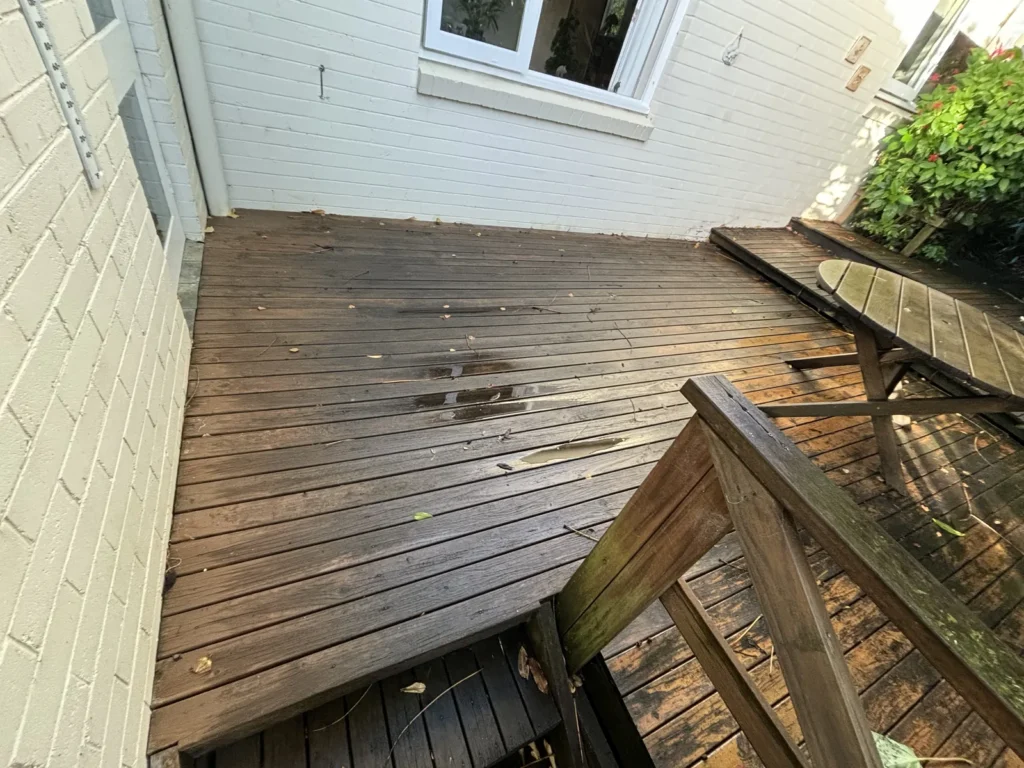
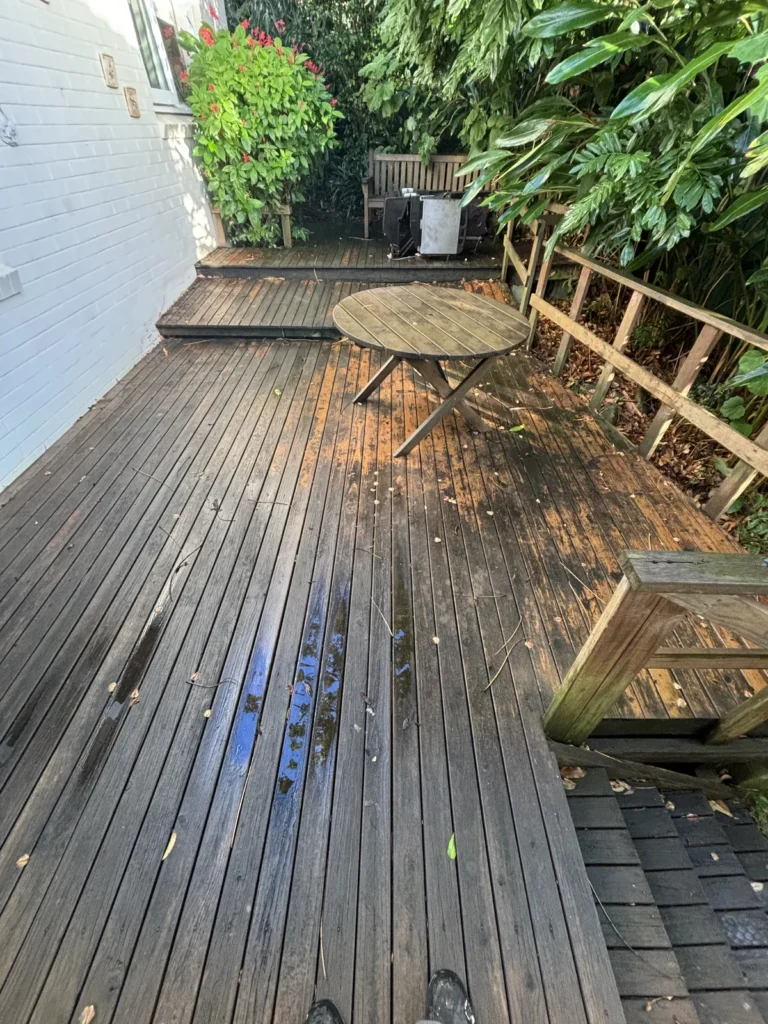
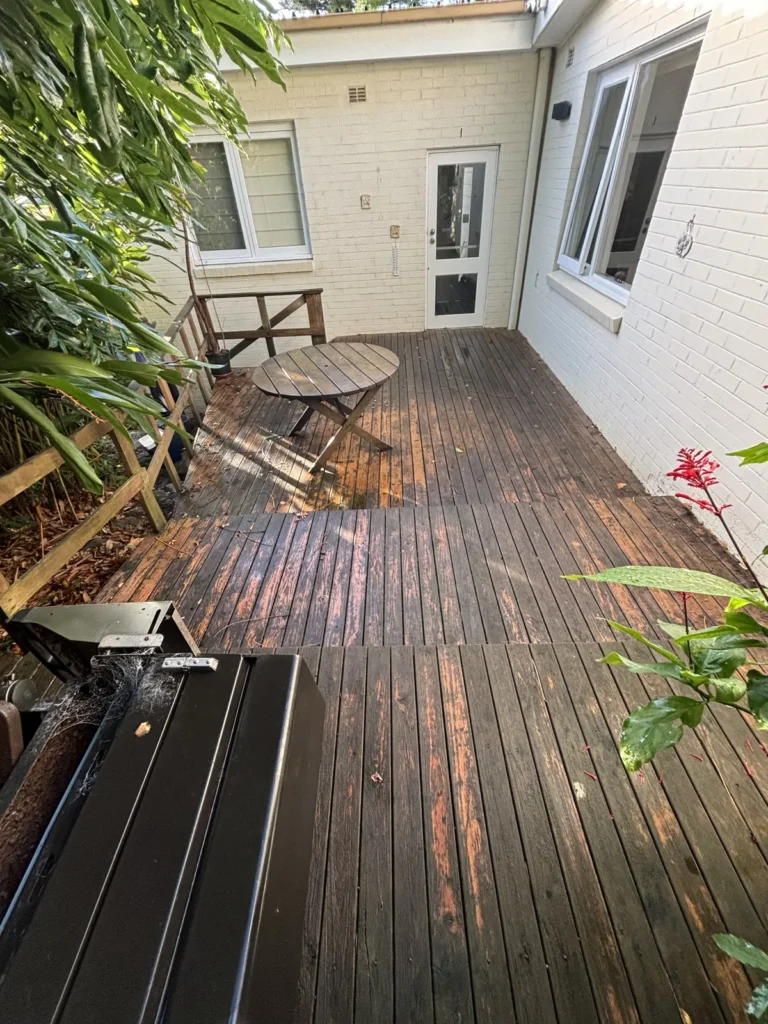
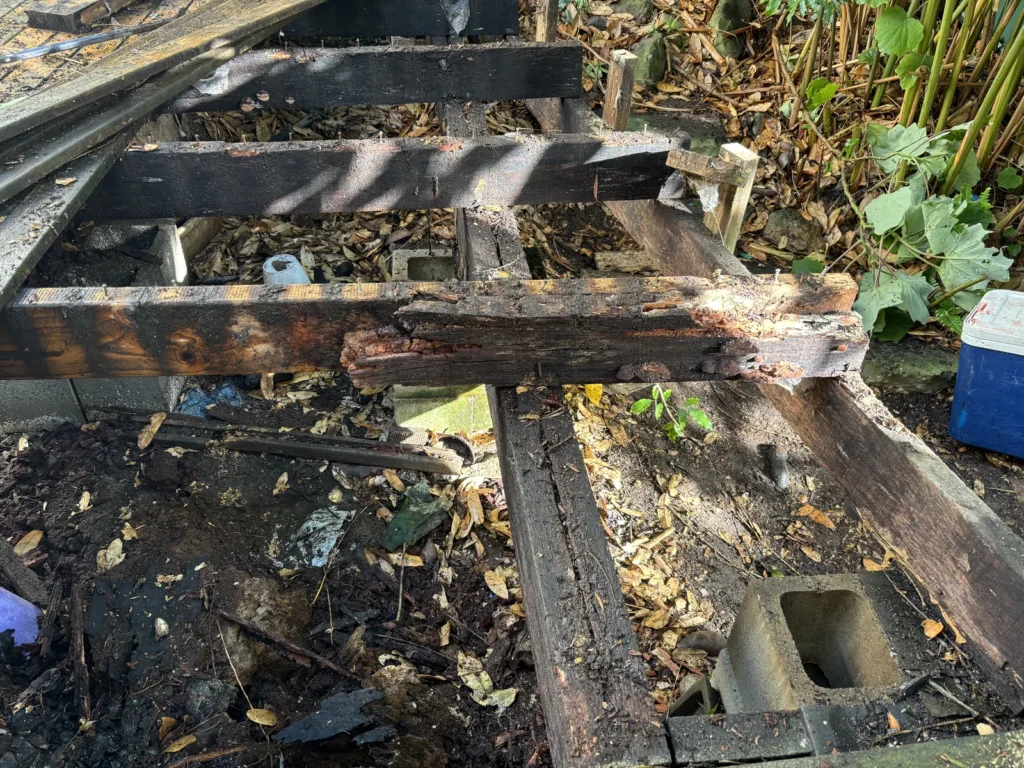
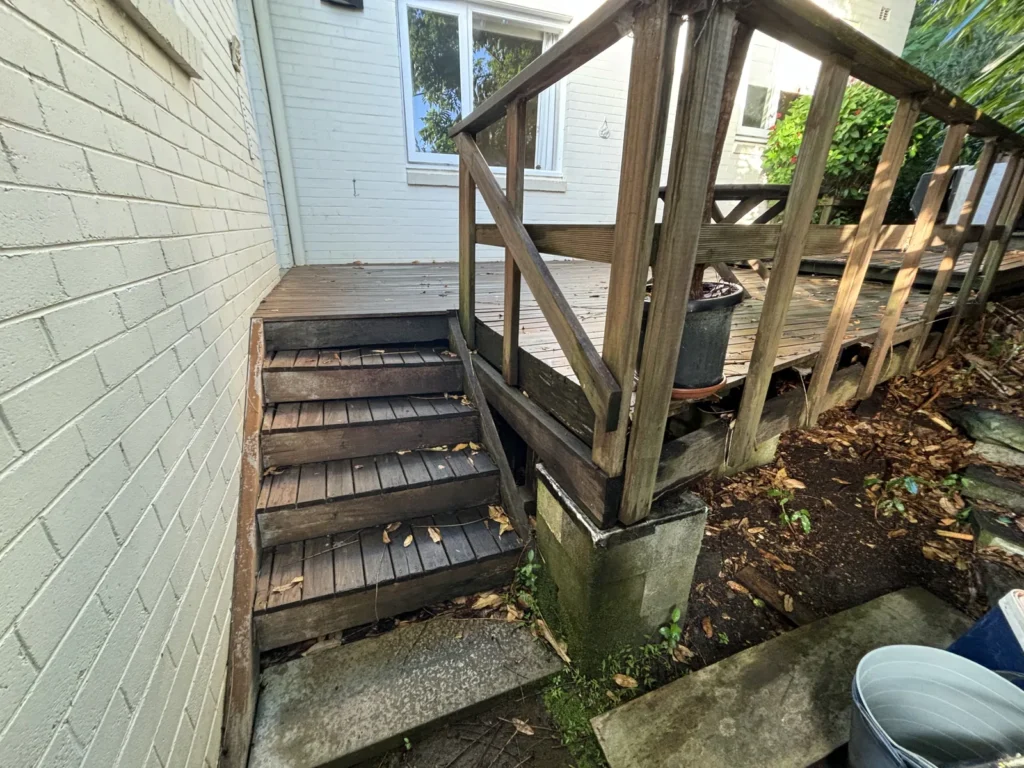
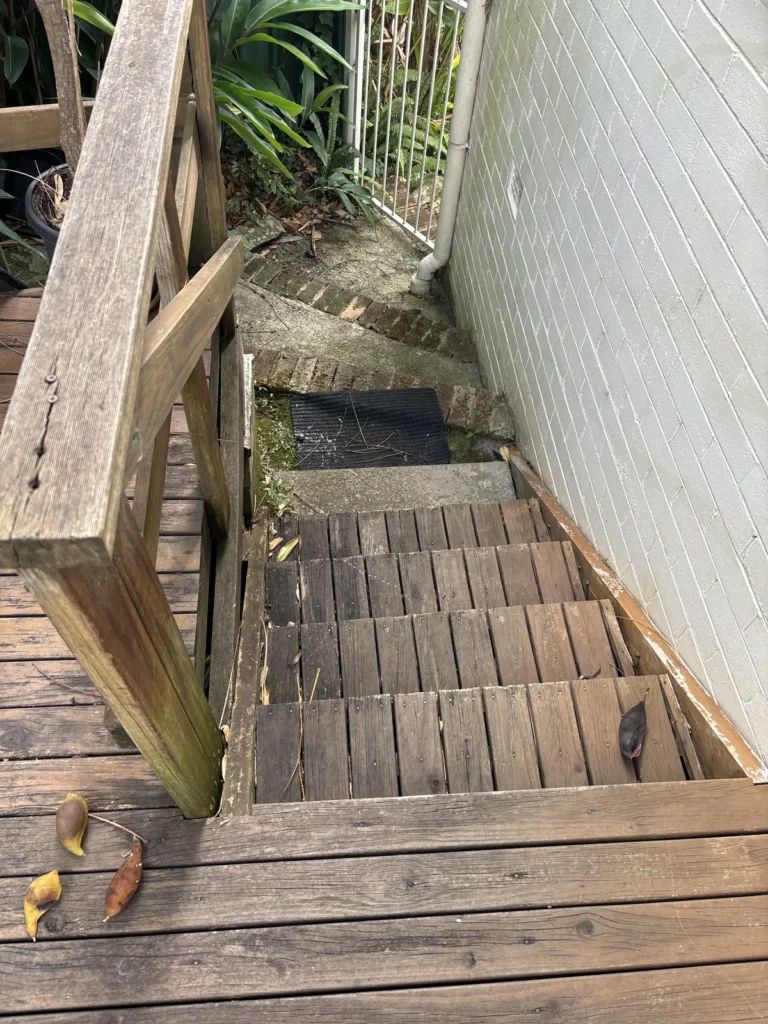
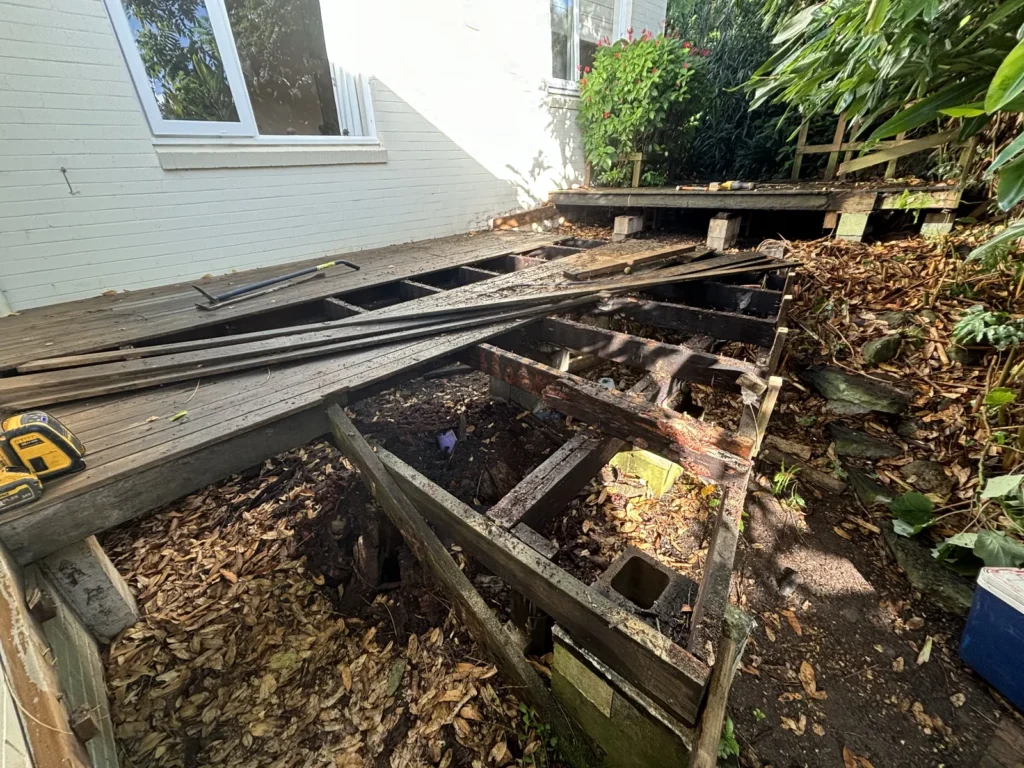
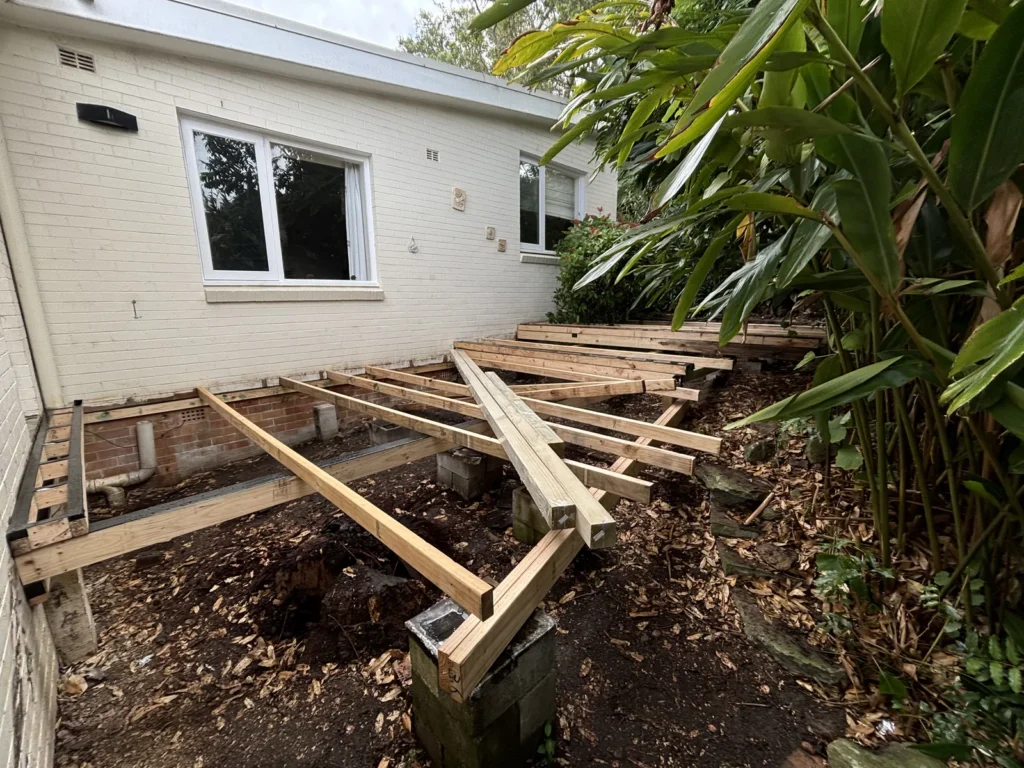
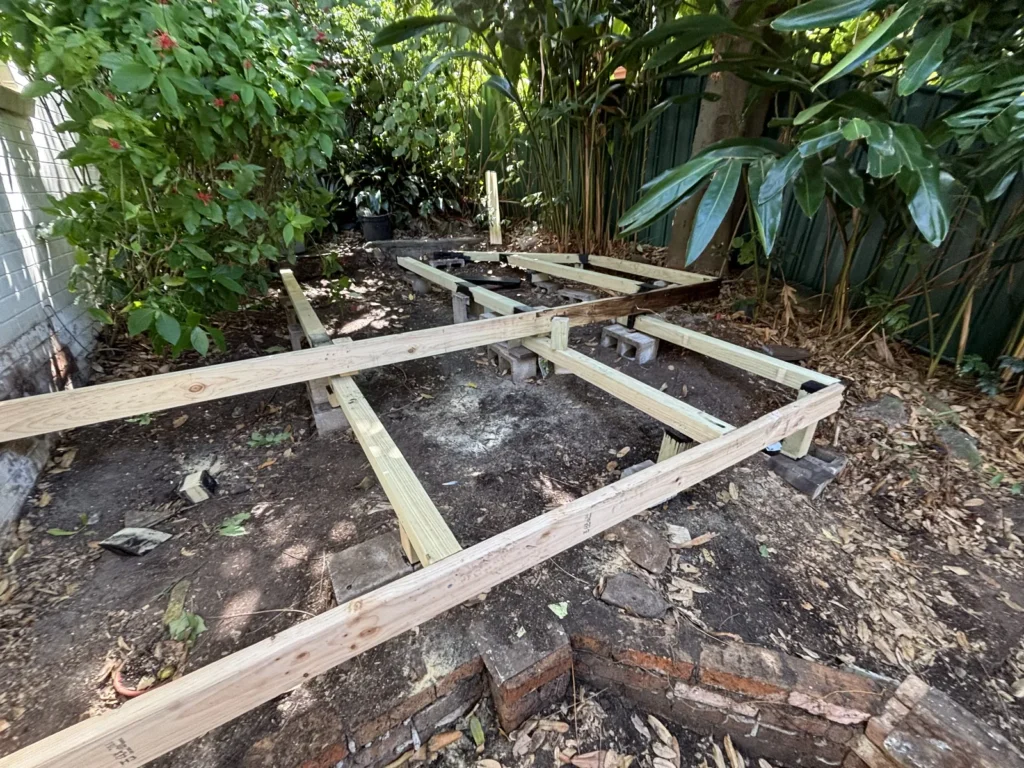
This one was well past its use-by date. The boards had split and cupped, the edges had blown out around the fixings, and one of the bearers had rotted through to the point where it was no longer carrying anything. The owners had stopped using it, which is the usual sign — nobody makes a conscious decision to abandon an outdoor space, they just quietly stop walking on it.
Before
What the owner actually wanted
Not a redesign. They liked the layout they had — the way it stepped down and wrapped around the back of the house worked, and they wanted it back the same. What they were after was the look and feel of natural timber that has silvered off with age, with a light balustrade rather than a solid one. So the job was to keep the shape and change everything underneath it.
Stripped back to a clean slate
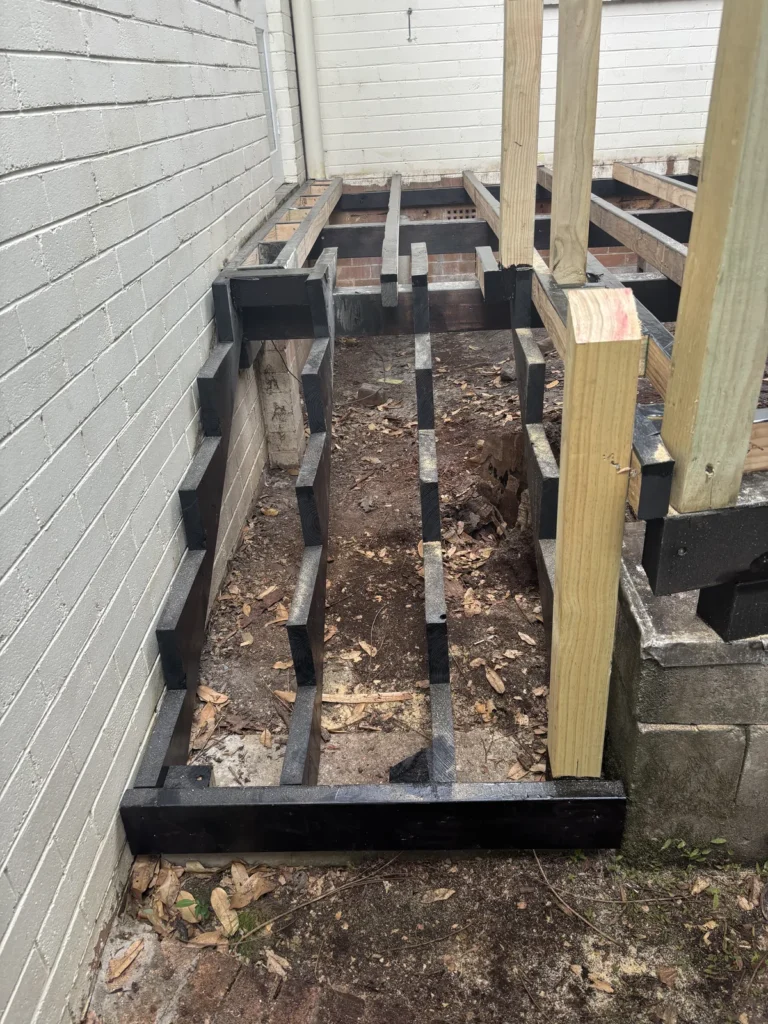
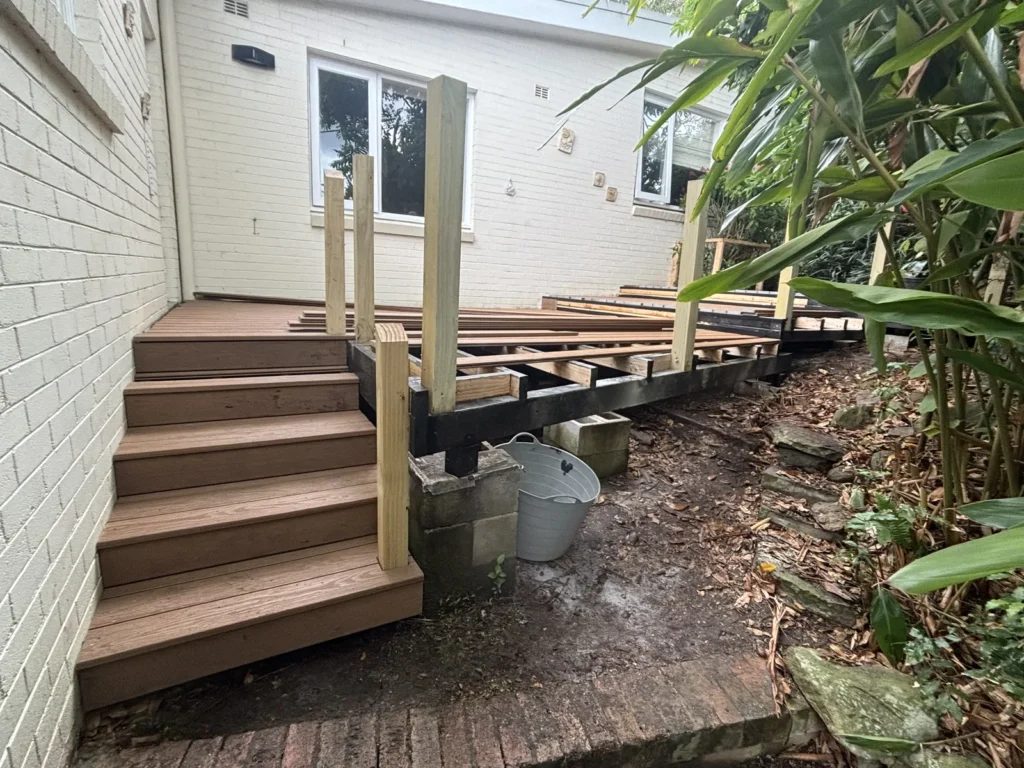
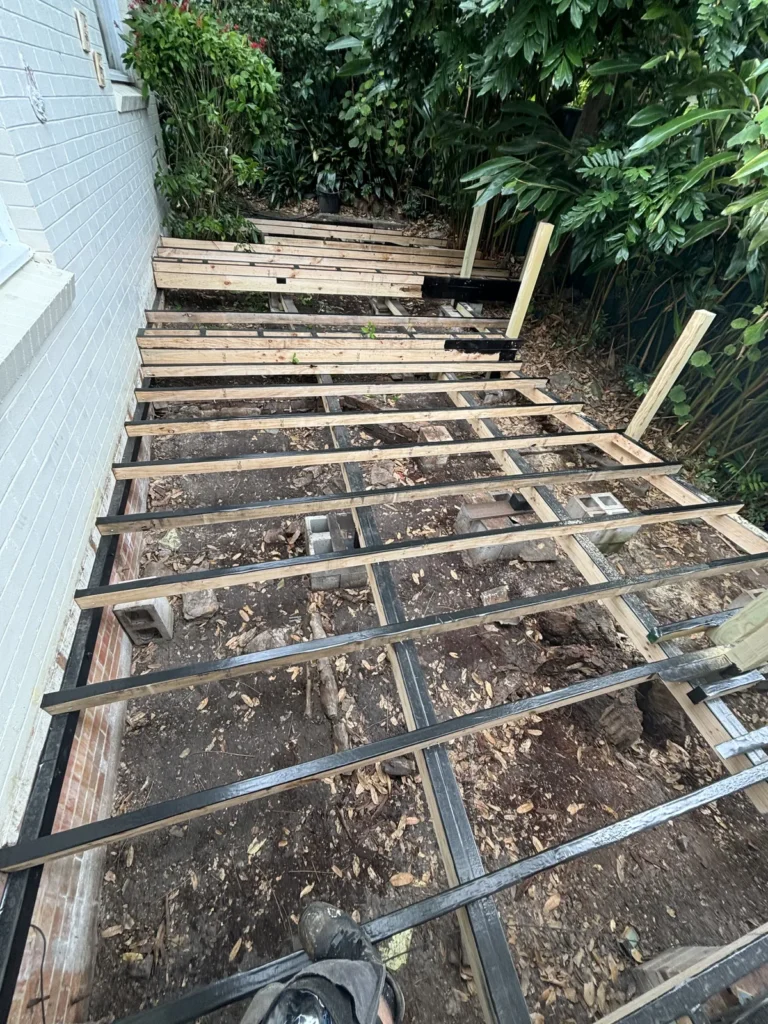
Every timber element came out. Nothing rotten was left in place to be built over, which is where most deck replacements go wrong. The footings were the one thing worth keeping: concrete blocks properly set into concrete footings, still sound, still level. Those stayed. Everything else was new.
The framing nobody will ever see
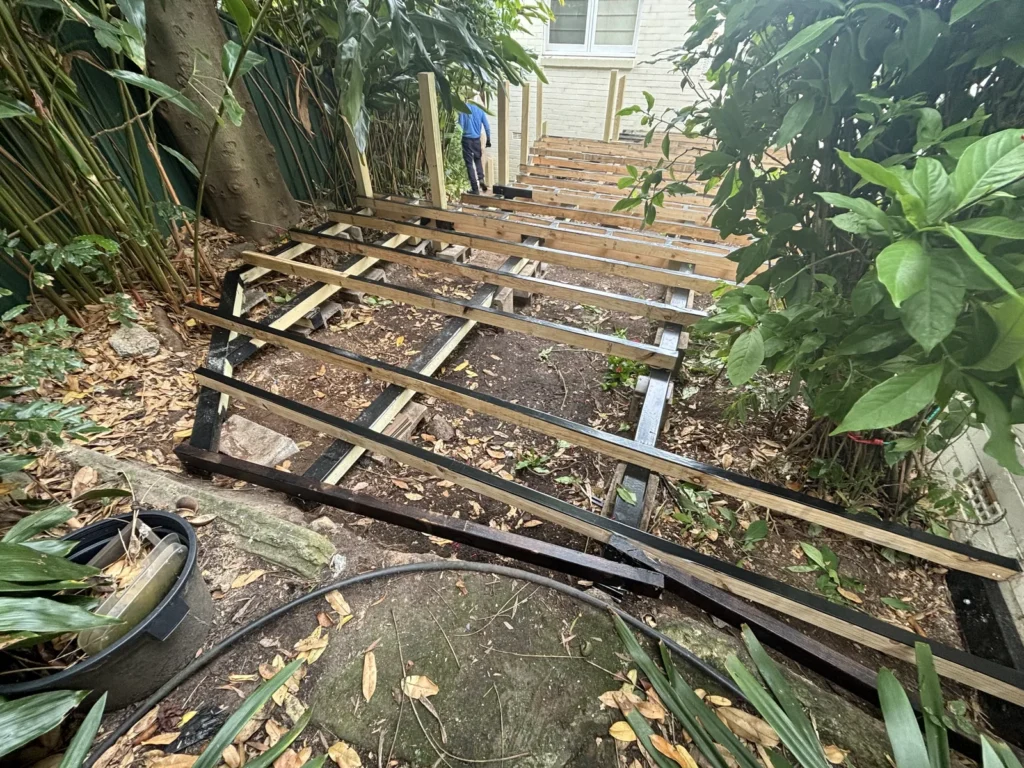
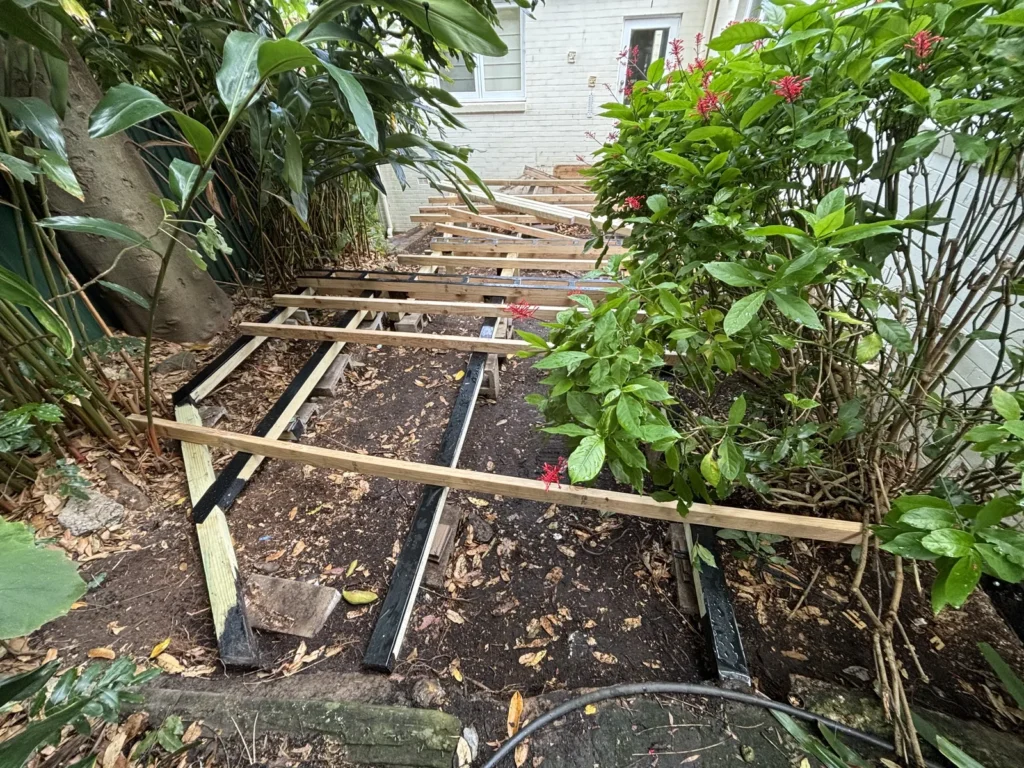
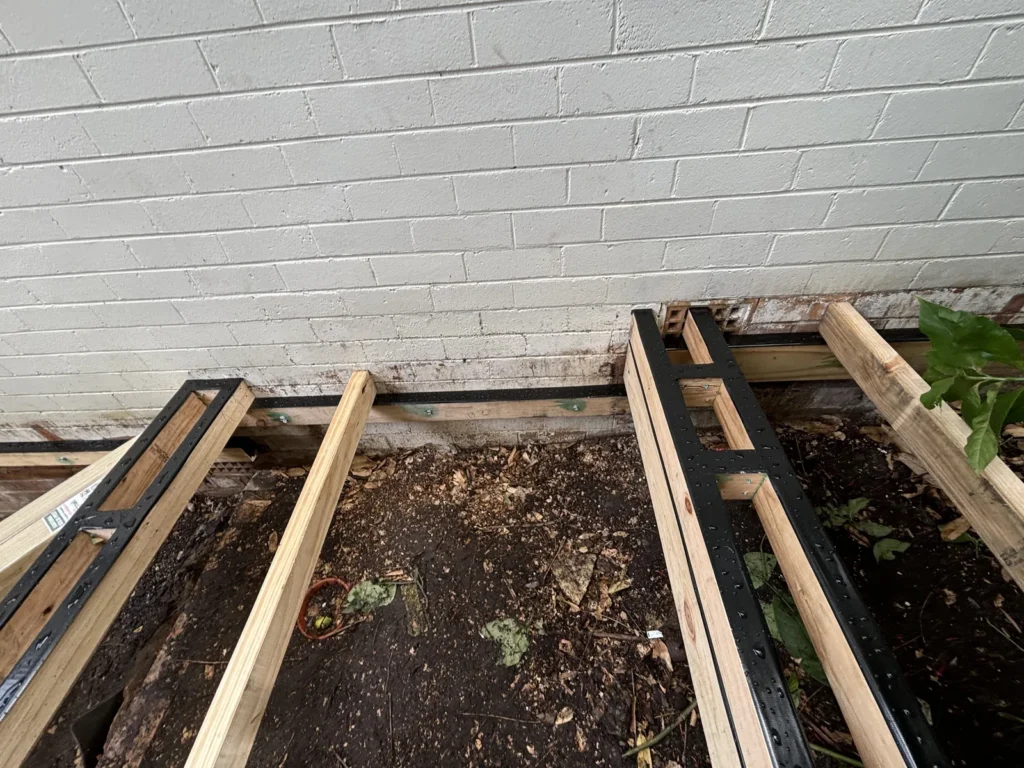
Treated pine throughout, with H4 bearers. Every exposed cut end got a bitumen treatment before it went in — including the bearers, which most builders won’t bother with because it’s the part no one inspects. All the outer framing timber that will collect leaf litter and debris over the years is coated as well. The joist tops carry Vapoursel frame protection tape, so water that runs off the boards never sits on the timber underneath.
Where decks actually rot
Not in the middle. They rot at the ends, at the fixings, and anywhere water can pool and stay. The stair stringers here were coated in bitumen waterproofing from end to end. Even the holes drilled for the brick screws were sealed and treated before the screws went in — an open hole in treated pine is a direct path for water into untreated heartwood.
Where the frame met the sandstone, the boards were trimmed to the rock line and the cut ends painted with a colour-matched external Dulux, so nothing raw is left sitting against damp stone.
The deck surface
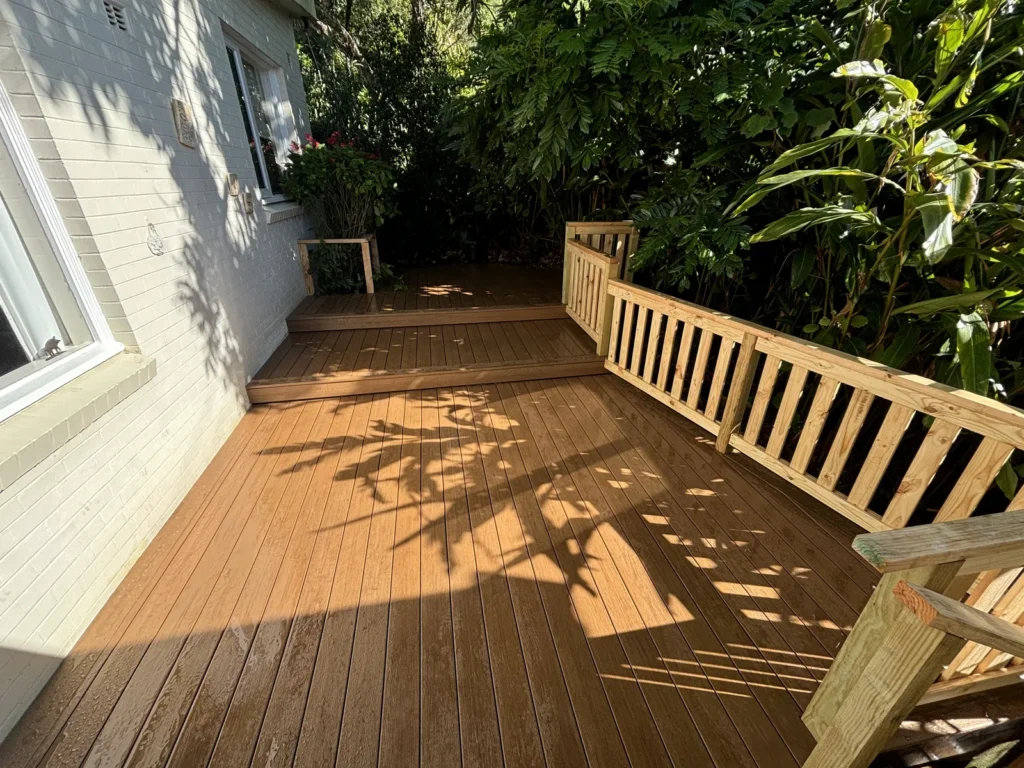
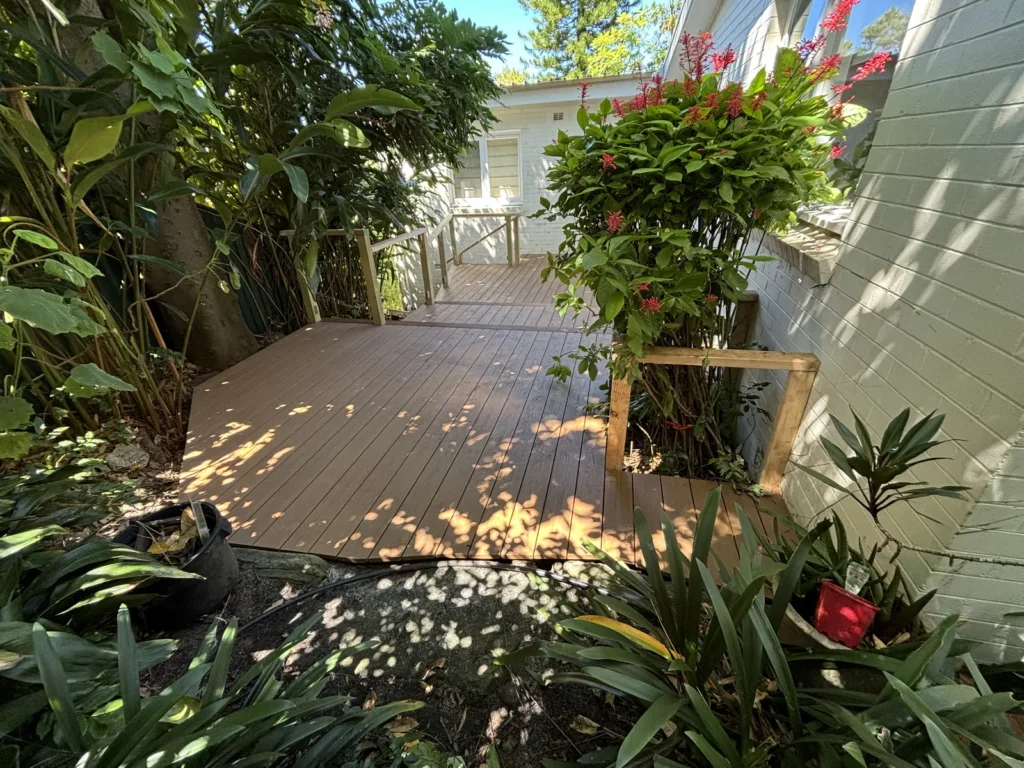
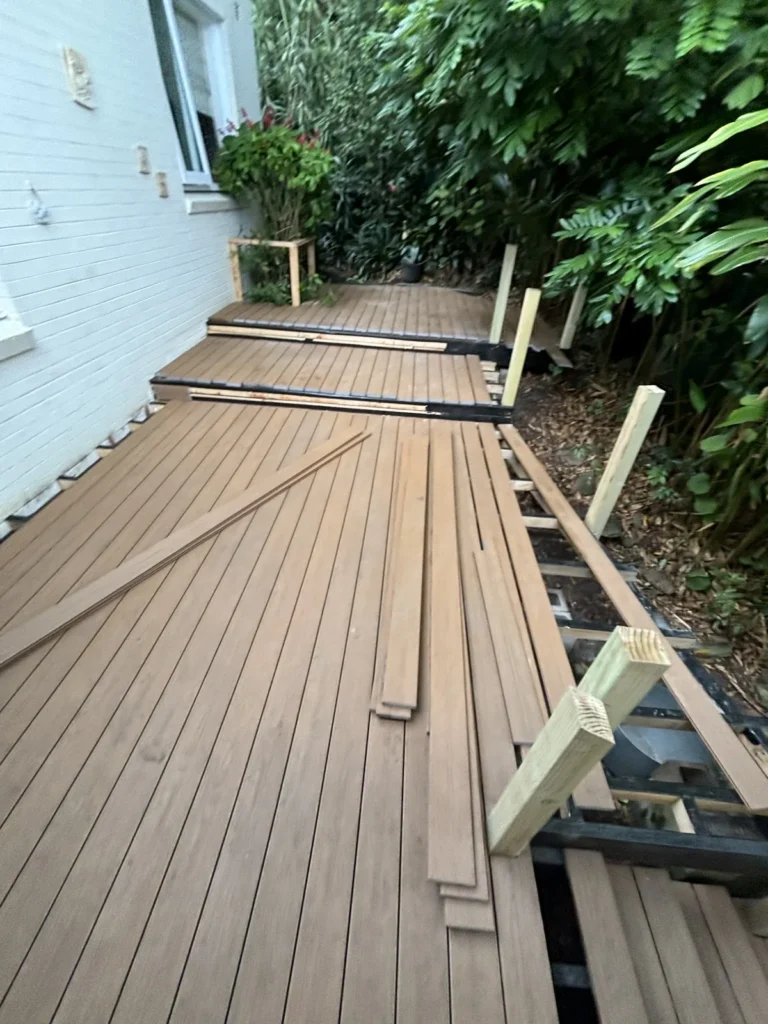
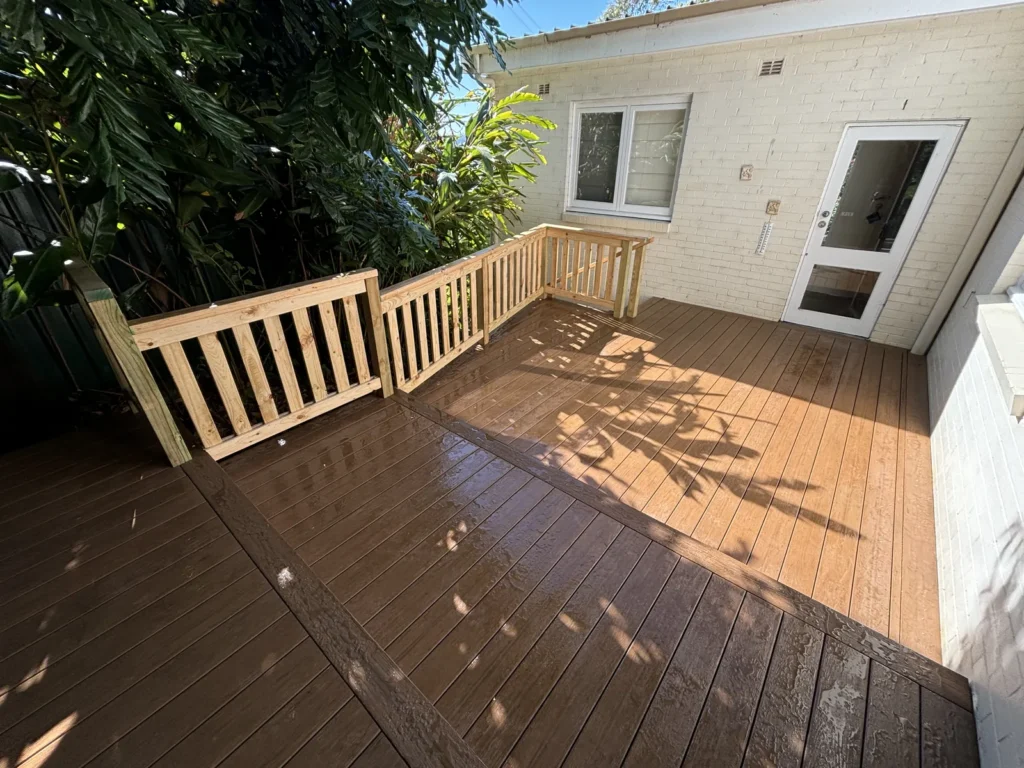
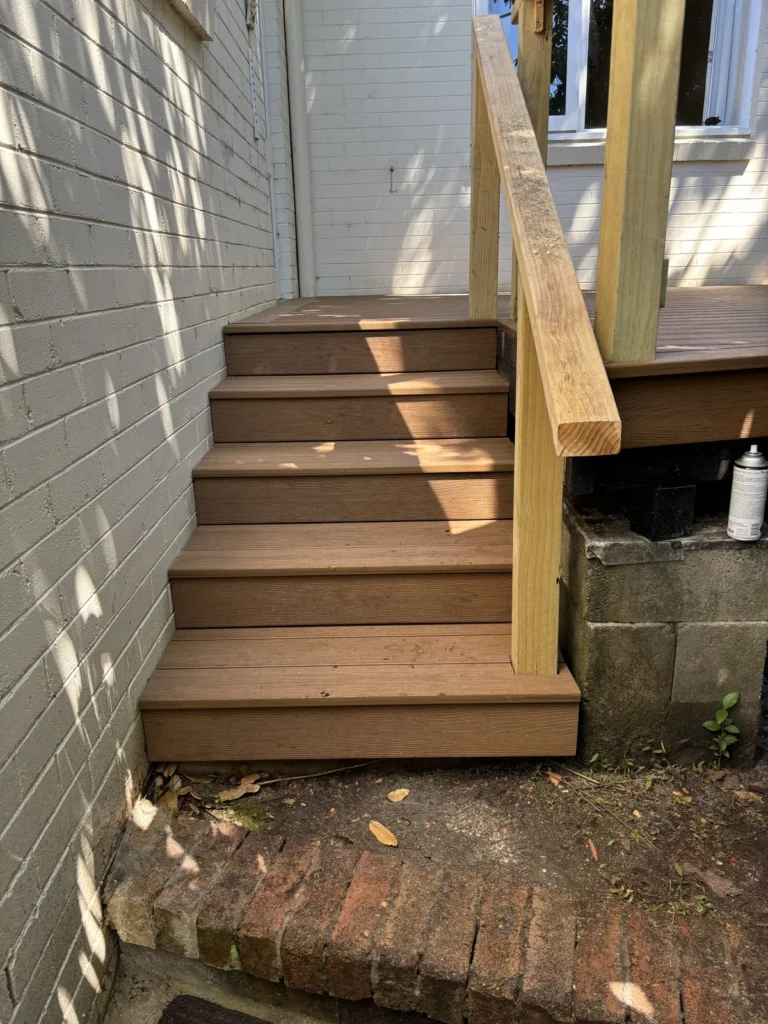
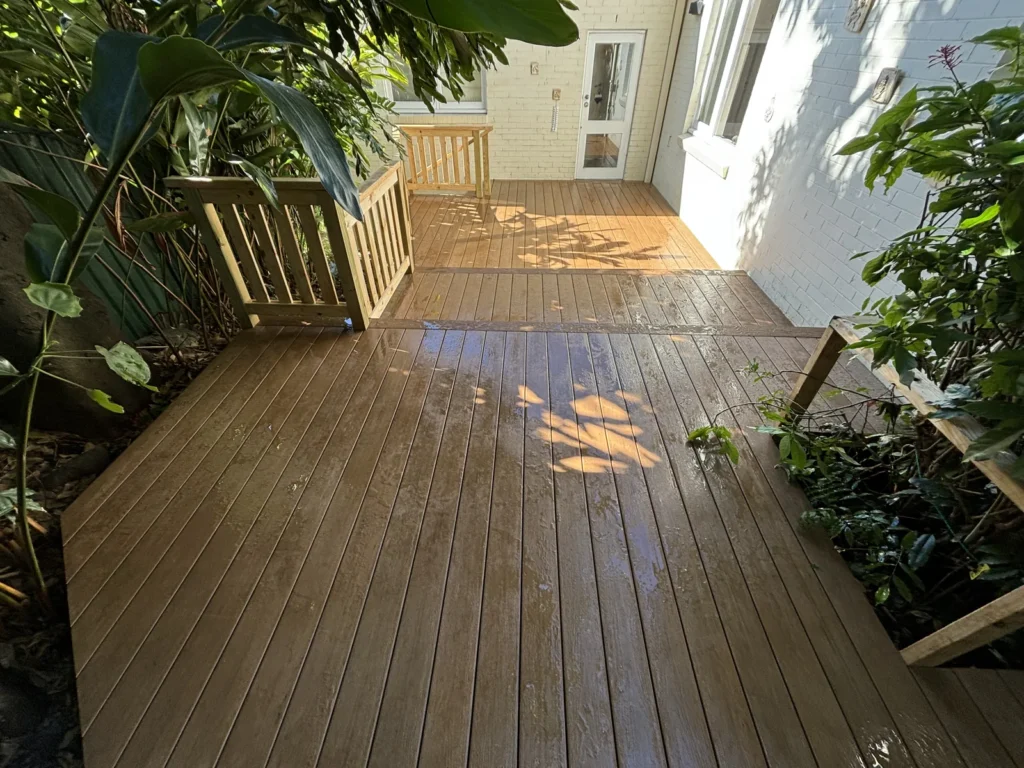
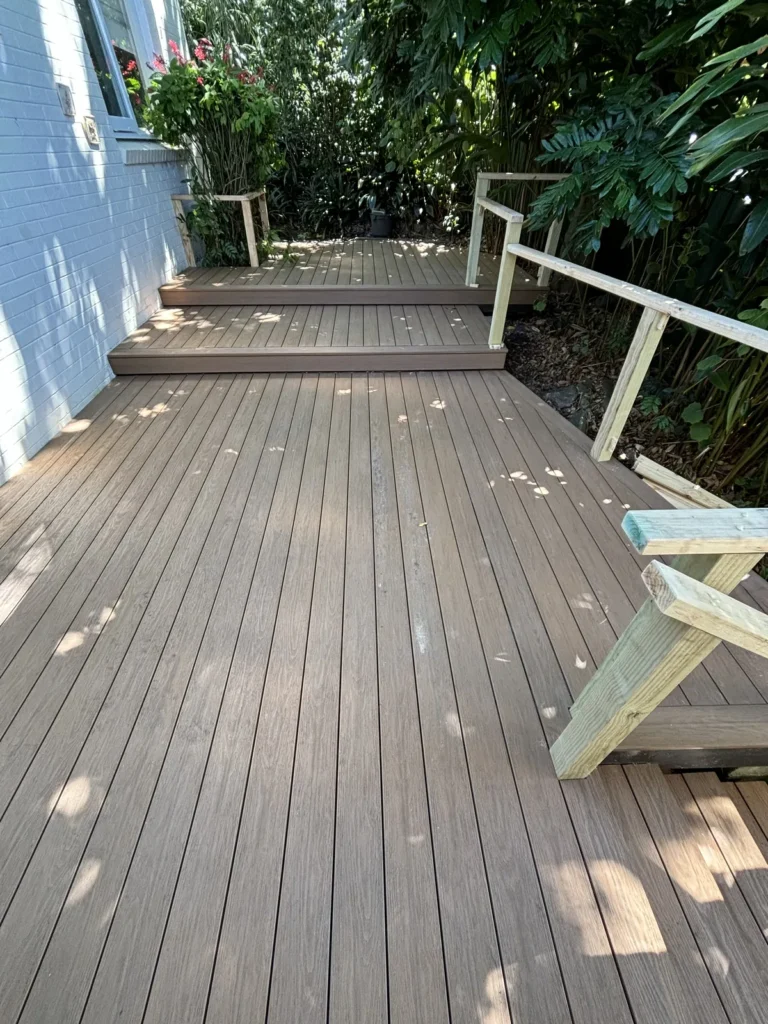
WoodEvo Advanced Oak, 140mm x 25mm. The colour variation in these photos is sun, shade and wet weather doing what it does on a textured board — it’s a single colour throughout.
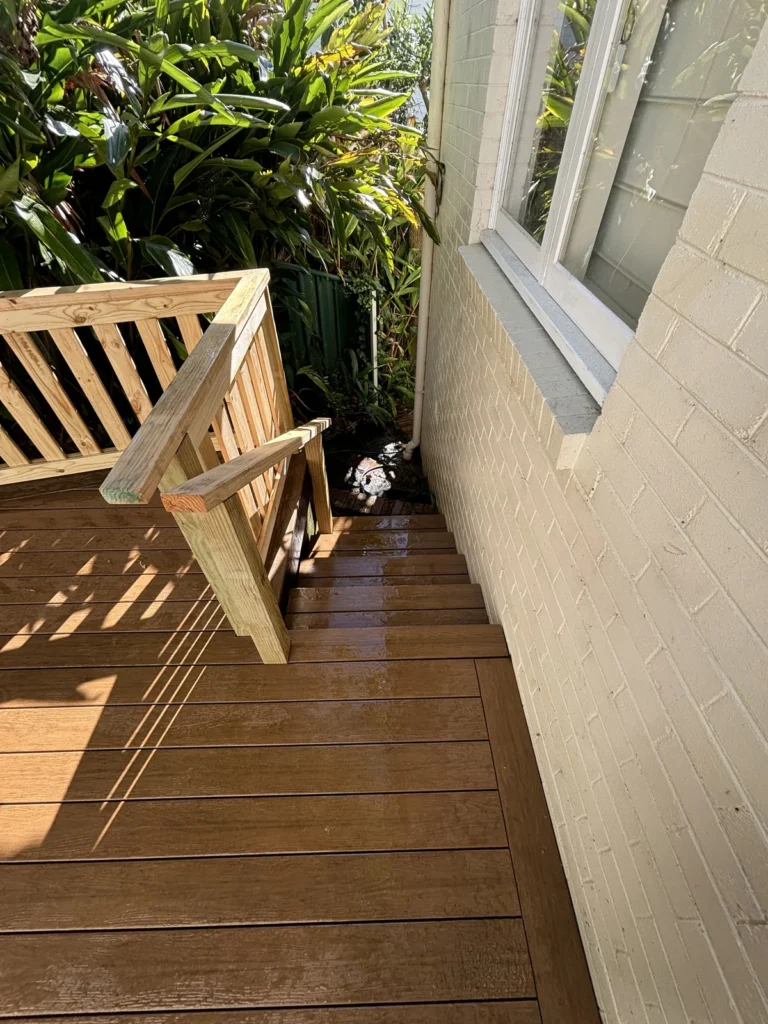
The boards are fixed with Camo edge clips, which go in through the side of the board so there is nothing screwed through the face of the deck. The starter boards and the breaker boards are fixed with WoodEvo plugs, colour-matched so the fixing disappears into the board. The stair treads are the same 140 x 25 board as the deck, not a separate stair product, so the surface and the texture carry straight down the steps.
The balustrade
This is not a compliance rail. The deck sits well under a metre, so no balustrade was required at all. This one is there to keep people and furniture out of the garden beds, and because the owner wanted the light, rustic look of a timber rail rather than glass or a solid wall.
Treated pine, and the bottom rail was custom built so that water can’t be trapped or sit anywhere along it — a standard flat bottom rail is a trough, and it’s the first part of any balustrade to go. Then Cutek Oil, which lets the timber weather and silver off naturally instead of sealing it under a film that eventually peels.
Finished
The details
Suburb
Neutral Bay
Size
38m²
Decking
WoodEvo Advanced Oak, 140mm x 25mm
Fixings
Camo edge clips, WoodEvo plugs to starter and breaker boards
Stairs
Treads in the same WoodEvo Advanced Oak 140 x 25 board
Framing
Treated pine, H4 bearers
Frame protection
Bitumen to all cut ends and outer framing, Vapoursel tape to joist tops
Balustrade
Treated pine, custom bottom rail, Cutek Oil
Footings
Existing concrete footings retained
Time on site
One week
Completed
March 2025
My take on this one
Low decks are harder than high ones, and people rarely believe that. When a deck sits close to the ground there’s almost no airflow underneath, the frame stays damp for longer after rain, and leaf litter builds up against the outer framing and never dries out. That’s why this one failed in the first place, and it’s why the frame here got the treatment it did. The boards on top are the part you see and the part that lasts longest. The frame is the part that decides whether you’re doing this again in twelve years.
Where the clearance is tighter than this, timber framing stops being an option at all. On another Neutral Bay deck with only thirty millimetres to work with I framed it in ClickDeck aluminium instead of pine.
Who you're dealing with
I hold Licence 272840C — with 13+ years building decks around Sydney. I work alone on the tools. The person who quotes your job is the person who builds it and the person who sweeps up at the end.
Neutral Bay is an easy hop over the bridge for me, so it’s well within the area I work.