
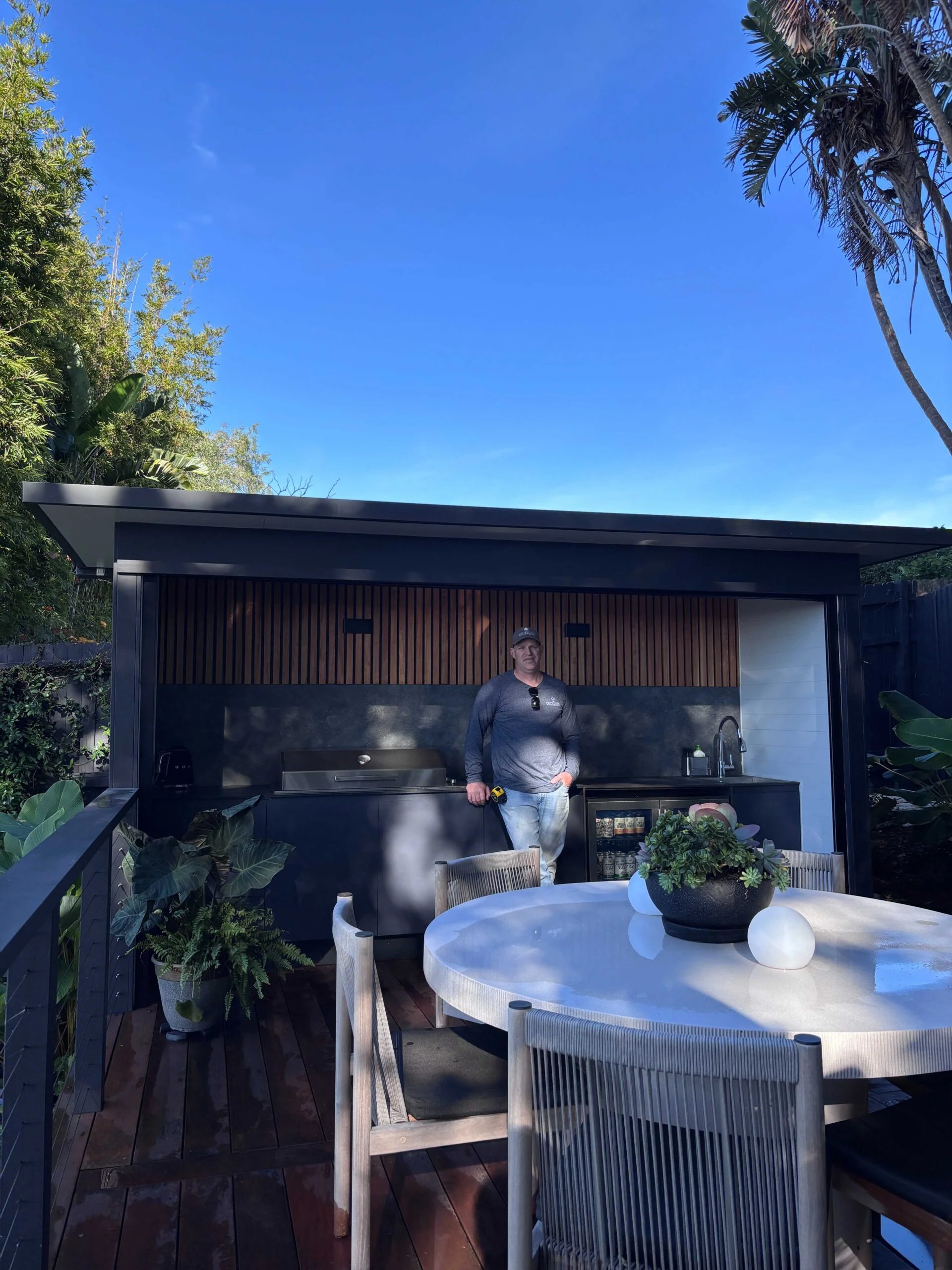
From The Workshop
How to Find a Reliable Deck Contractor in Sydney
Reliable doesn’t mean cheapest, fastest, or loudest. It means the builder who shows up when promised, builds what was quoted, and stands behind the work twelve months later when something needs a second look. After 500+ decks across Sydney, I can tell you most clients who get burned didn’t get unlucky — they skipped the checks that would have shown them the problem before a cent changed hands.
This guide walks you through what reliability actually looks like, how to spot it before you sign, and what proof you should demand. No filler. Just what works.
What Reliable Actually Means in This Trade
Decking is a strange corner of the building world. The skill ceiling is high — getting a frame square, level, and ventilated properly takes years to learn — but the entry barrier is low. A ute, a circular saw and a phone number is enough to start trading. That gap is why client experiences range from excellent to disastrous on the same suburban street.
A reliable deck contractor in Sydney usually looks like this:
- Holds a current Licence 272840C (verifiable on the Service NSW register)
- Carries public liability and home warranty insurance where required
- Quotes in writing with specifications named, not vague descriptions
- Names the actual person doing the work (and turns up to do it)
- Has clients from twelve months ago who’ll still take the call
- Doesn’t pressure you to sign today
None of those points are negotiable. Each one is the absence of a specific failure mode I’ve seen go wrong on jobs I’ve been called to rescue. If you’re still weighing up whether to hire a contractor at all, my guide on DIY vs hiring a deck contractor covers where the line sits.
Why Referrals Still Beat Reviews
Google reviews are useful. They’re not enough. Reviews capture the first 30 days after handover, when the deck looks new and the client is delighted. They don’t capture year two, when a poorly ventilated frame starts cupping the boards, or when a hidden joist bracket fails and the builder has stopped answering the phone.
Word of mouth from past clients fills that gap. When someone says “Greg built our deck three years ago and it still looks new” — that’s the review that matters. It captures durability, post-handover responsiveness, and whether the builder backed up their warranty when it counted.
If you’re starting fresh and don’t know anyone with a recent deck, ask:
- Neighbours with decks you admire — knock on the door, most people are happy to talk
- Local Facebook community groups (Eastern Suburbs Mums, Coogee Locals, suburb-specific groups)
- Your architect or building designer if you’re using one
- The trades who’ll work alongside the decking — electricians, plumbers, landscapers — they see the standard of work weekly
Then verify what you hear against the checks below. Referrals point you in the right direction. They don’t replace due diligence.
The Two Failure Signals That Catch Most People Out
Of all the bad-builder stories I hear from new clients, two patterns come up again and again. Watch for both.
Signal 1: Frame Shortcuts Hidden Under the Boards
This one is invisible until the deck fails. The boards look beautiful for the first year, then the trouble starts — joists at wrong centres, undersized bearers, no joist tape, ledger boards bolted into rendered brick with no flashing, framing timber that should be H4 treated pine but isn’t. Once the boards are screwed down, no client is going to lift them to check.
The frame is where corner-cutting pays for the dodgy builder and costs the client everything. AS 1684 covers residential timber framing, including bearer and joist sizing for decks. If a builder can’t tell you which joist centres they’re using and why (typically 450mm for hardwood, 300–400mm for composite depending on board), that’s a red flag in itself.
The frame is 80% of the deck’s lifespan. The boards are what your guests see. The frame is what keeps the deck alive twenty years from now.
Signal 2: Vague Quotes With No Specifications
“Supply and install timber deck, approx 25 sqm — $X” is not a quote. It’s a number on paper. A real quote names every material, every dimension, every fastener type. It tells you whether the framing is H3 or H4, whether the boards are screwed from the top or hidden-fixed from below, whether joist tape is included, whether the ledger is bolted with appropriate flashing.
When the spec is vague, two things happen: the builder can substitute cheaper materials without you knowing, and disputes about what was agreed have no paper trail. If the quote you’re looking at fits on one page and could describe ten different decks, ask for it in detail. If the answer is “trust me, mate” — move on.
What to Demand Before You Sign
Reliability isn’t something you discover after the build. It’s something you verify before the build. Here’s the short list I’d tell a friend to insist on:
| Proof | What you’re checking | How to verify |
|---|---|---|
| Licence number | Builder is legally allowed to work on residential projects above $5,000 | Search Service NSW licence register (free, takes 30 seconds) |
| Public liability insurance certificate | You’re covered if someone is hurt on your property during the build | Ask for current certificate of currency — should be in the builder’s name |
| Home Building Compensation Fund coverage | Required in NSW for residential work over $20,000 — protects you if the builder dies, disappears, or becomes insolvent | Builder provides certificate before work starts; verify on icare register |
| Site visit to a current or recent build | You see actual workmanship, not photos that could be anyone’s | Builder takes you to a job in progress or a recent handover |
A site visit is the single most useful step most people skip. Photos can be lifted from anywhere. A live build shows you frame quality, site tidiness, how the builder talks to their client, and whether the standard of work matches the photos on the website.
If a builder won’t take you to a current site — especially one in your suburb or nearby — ask yourself why.
Red Flags That Should End the Conversation
Some signals are subtle. Others tell you everything you need to know in the first phone call. If any of these come up, walk away. There are good builders in Sydney. You don’t need to negotiate with a bad one.
- Demanding more than 10% deposit upfront — NSW caps residential building deposits at 10%, and the cap exists because deposit theft used to be rampant
- No written contract for work over $5,000 — required by NSW law on residential building work over this threshold
- Cash-only or “off the books” pricing — leaves you with no warranty, no insurance cover, no recourse
- Pressure to sign today — reliable builders are usually booked weeks or months out, they don’t need to close you on the spot
- Won’t name the actual person doing the work — if subcontractors are involved, you have the right to know who’s swinging the hammer on your property
- Vague about timeline or refuses to commit to a start date in writing
- No examples of completed work in your area or in the materials you’re considering
The Rescue Job Problem (Why Good Builders Won’t Save You From a Bad One)
This is the part most homeowners don’t realise until it’s too late. If your deck goes bad and you try to find a reliable builder to come in and finish it or fix it — most won’t touch it.
Here’s why. To bring a half-built or badly-built deck up to a real builder’s standard usually means a near-complete rebuild. Boards have to come up to inspect framing. Frame defects mean replacing structural timber. The client has already spent their budget on the first builder, so the rescue quote feels brutal — even though it’s the honest cost of doing the job properly. Warranty becomes a minefield: a good builder can’t reasonably warrant work where they didn’t lay the frame.
And then there’s the obvious question that every tradesman asks before quoting a rescue: why did the first builder run? Usually it’s because the client was difficult — moving goalposts, late payments, scope creep. So the rescue tradesman walks in expecting trouble. Most decide it’s not worth it.
I learned this the hard way. A client who’d been to primary school with me got caught with a half-finished deck and a builder who’d gone quiet. She hounded me to help. I caved. It was a nightmare from start to finish — every assumption I made about scope, every “while you’re here” request, every payment milestone became a battle. I finished it, but I lost money and weeks of headspace.
Now my answer to rescue work is no. Not because I can’t do it — because the structure of the situation almost guarantees pain for everyone involved.
The lesson for homeowners: getting the first hire right matters far more than people realise. The cost of going cheap or rushing the decision isn’t just a bad deck — it’s that nobody good will help you fix it.
The Questions That Separate Real Builders From the Rest
When you’ve shortlisted two or three candidates, the conversation tells you most of what you need to know. Try these:
- “Who exactly will be on site building my deck?”
- “Can you walk me through your framing spec — bearer size, joist centres, fixings?”
- “What’s your standard warranty, and what does it cover?”
- “Can I visit a job you’ve got running this week?”
- “What’s your start date, and what’s your written commitment to that date?”
- “What happens if there’s a delay — who pays for what?”
The answers don’t have to be perfect. They have to be specific. A reliable builder will answer with names, numbers, and dates. An unreliable one will deflect, generalise, or change the subject.
For a deeper dive into the questions that flush out the right builder, I’ve written a separate guide on what to ask before signing anything.
Where The Decksmith Sits in This
I’m the lead carpenter on every build. I quote, frame, board, and finish every deck personally, with a small team where required. No reveal-day surprises. Licence 272840C, verifiable on the public register. More on how I work as a Sydney deck builder.
I’m not the cheapest builder in Sydney. I’m also not the most expensive. I’m one of a small number of builders who specialise in decking only — frames, boards, balustrades, pool surrounds, stairs and the pergolas that sit over them. Twelve years in business. Eastern Suburbs base, Sydney-wide work.
Before any of that starts, it’s worth confirming whether your deck needs a council permit — I’ve written a guide on whether you need permits for a deck in Sydney, covering exempt development, CDC and DA pathways.
If you want a rough idea of where your project might sit on cost before we ever speak, the pricing calculator at the-decksmith-pricing-guide.netlify.app will give you a realistic range based on your specs. No email gate. No hard sell.
Either way, do the checks. Insist on the proof. Talk to past clients. The right builder will welcome every one of those questions — because the right builder has nothing to hide. For the broader picture of what to look for beyond red flags, see my guide on what to look for in a deck builder.
Get Your Deck Estimate
Use the calculator to see indicative pricing for your project.
Open Calculator
2 Responses